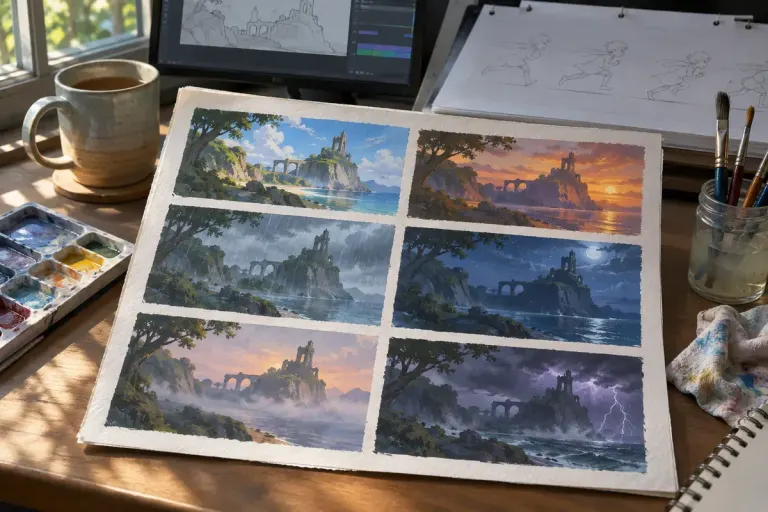
Animation Craft
A colour script plans the mood across a sequence
Read colour changes across an animated sequence and distinguish a colour script’s planning role from a fixed dictionary of emotional meanings.

Watch closely. Read a little further.
Read colour changes across an animated sequence and distinguish a colour script’s planning role from a fixed dictionary of emotional meanings.
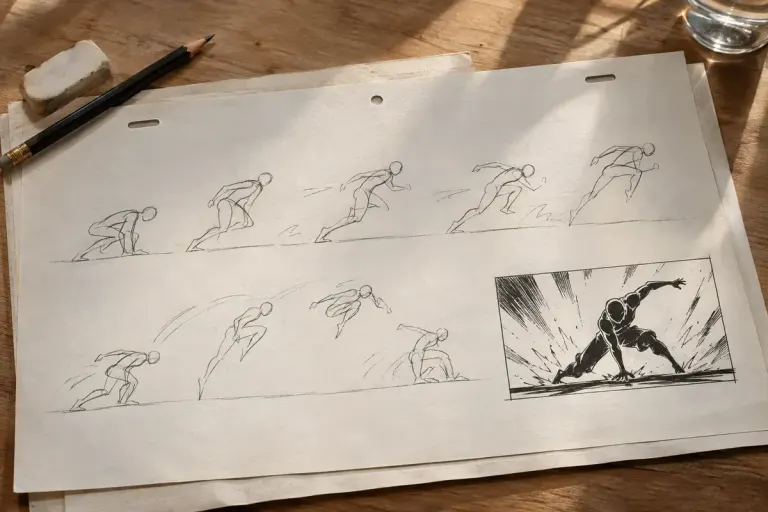
Look closely at impact frames in animation: brief changes in contrast, shape and colour that make an action feel stronger without adding more detail.
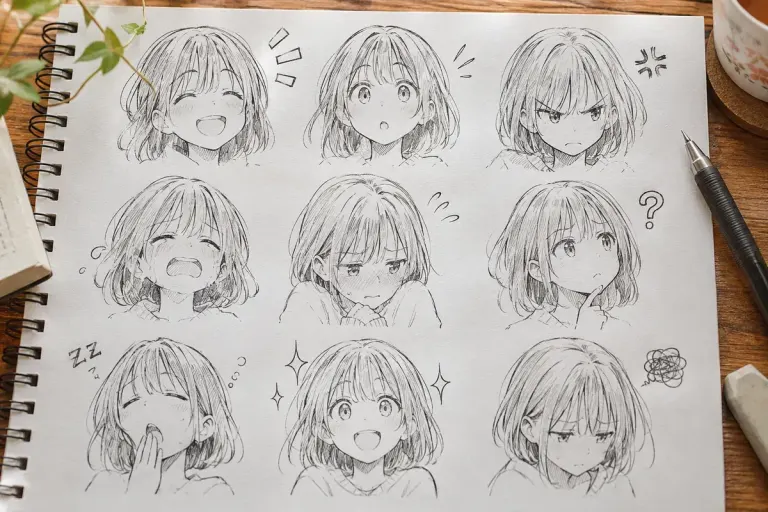
Manga emotion marks work with faces, posture and panel context. Explore sweat drops, tension marks and an original drawing exercise without treating them as a fixed code.
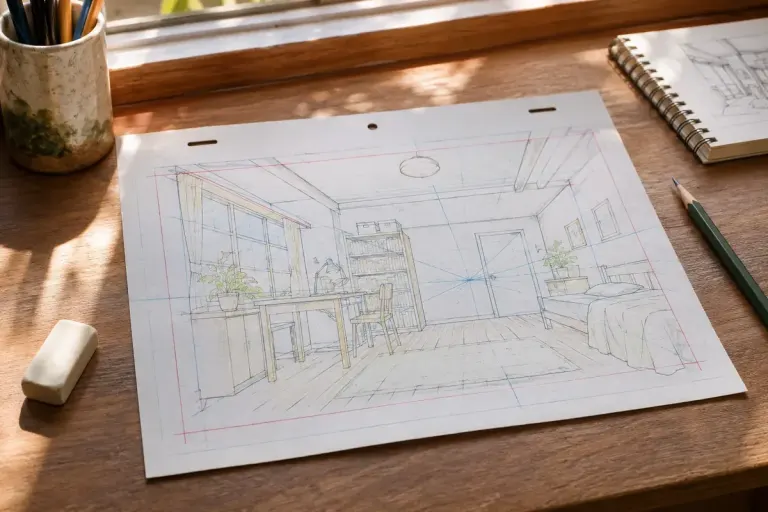
Layouts turn an animated scene into a workable space. Look at scale, perspective and camera instructions before the polished final frame.
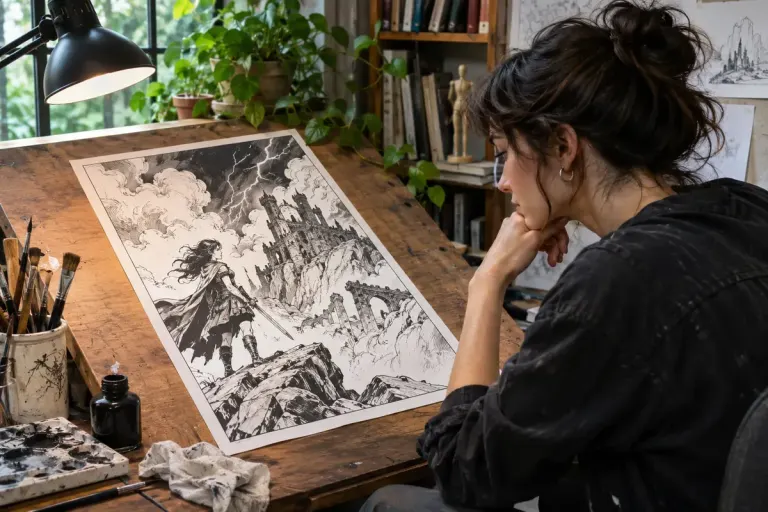
A manga splash page gives one image unusual space. Look at the page before and after it to understand how it changes emphasis and reading rhythm.

Repeated transformation animation can create recognition and rhythm. Compare the sequence’s context before dismissing every reused shot as the same scene.
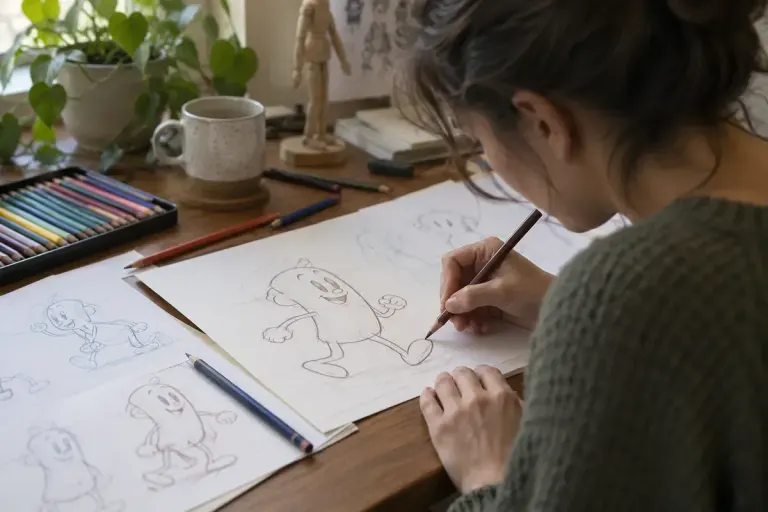
Squash and stretch makes an animated object feel elastic or heavy. Follow the changing silhouette while checking that its apparent volume still makes sense.

Look beyond individual drawings to see how compositing combines backgrounds, characters and effects into the final atmosphere of an animated shot.
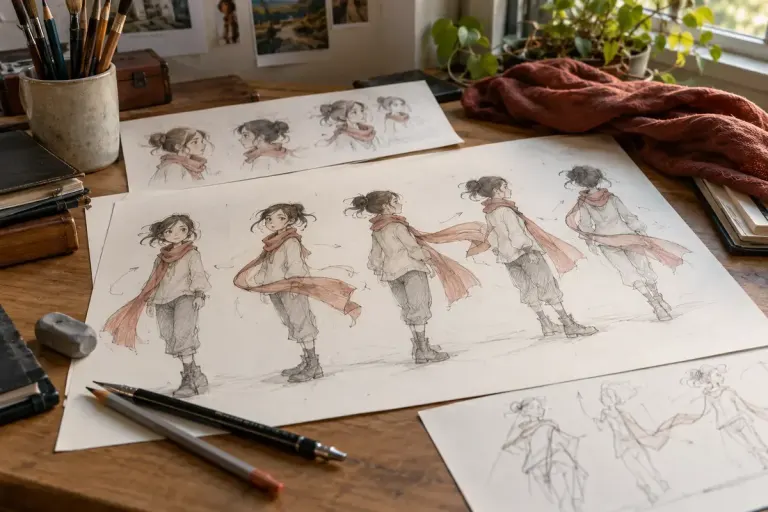
Notice how hair, sleeves and accessories continue moving after an animated character stops, and practise reading follow-through in a short shot.