
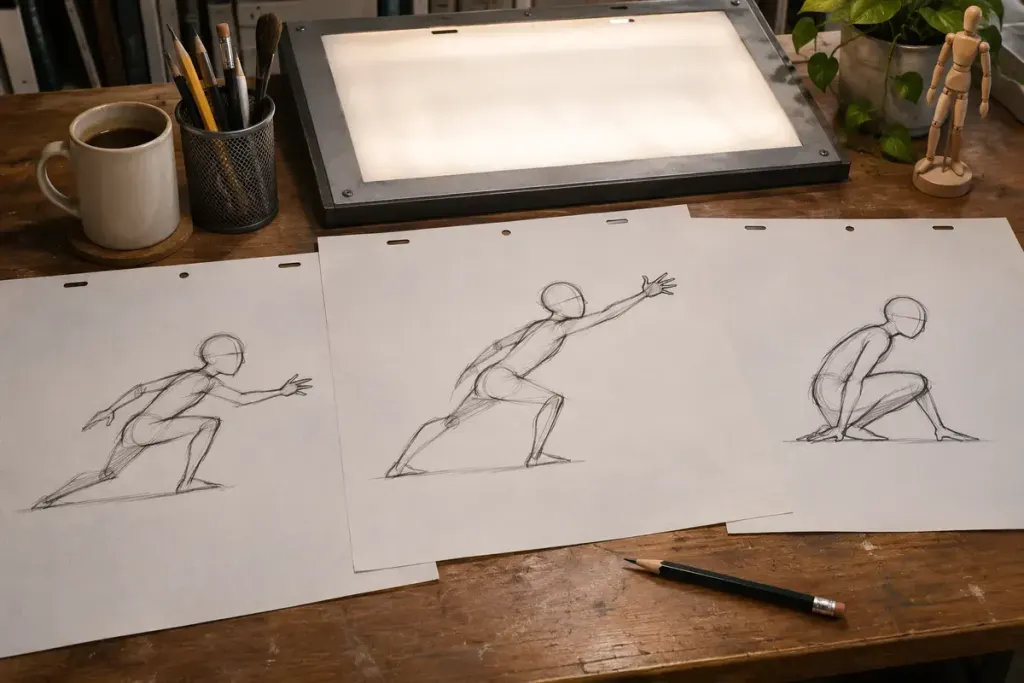
A character points, the hand travels a little too far, then settles into the intended pose. That small extra movement can make the action feel less like a switch being turned on. Animators often describe it as overshoot.
In an Animation Mentor discussion of moving holds, animator Shawn Kelly explains the idea of travelling beyond a destination and recovering into the pose. It is a tool for shaping movement, not a rule that every action must visibly bounce.
Find the intended resting pose
When studying a short sequence, identify where the character finally settles. Then replay the approach. Does the hand, head or body pass that position first? How quickly does it return? Does the movement feel heavy, nervous, playful or abrupt?
Keep the whole action in view. A single unusual frame can look like an error when separated from the timing around it. The apparent excess may be doing useful work at normal playback speed.
Distinguish overshoot from other trailing movement
Hair or clothing can continue moving after the main body has stopped. That is related to how motion is organised, but it is not automatically the same observation as the body passing its own final pose. Name the part you are following before applying a term.
For a small practice exercise, move a simple drawn shape towards a marked resting position. Compare a direct stop with a version that passes the mark and returns. Keep the total duration similar at first so you can notice the effect of the changed path.
Then reduce the overshoot. A subtle amount may suit a restrained performance, while a larger one may support a comic action. The right choice depends on the character, material and style of the scene.
Do not judge the technique only by whether it looks smooth. A deliberately rigid or sudden stop can also be expressive. The useful question is what the movement tells the viewer, and whether the extra travel supports that intention.