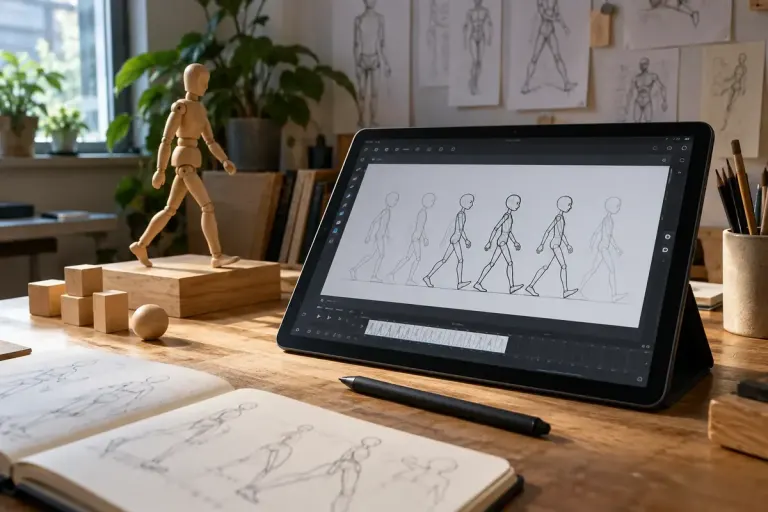
Animation Craft
A walk cycle needs a planted foot, not just repeating leg drawings
Make an animated walk feel grounded by checking the supporting foot against the floor, then matching body travel, timing and the loop’s final frame.

Watch closely. Read a little further.
An independent anime and manga journal about reading habits, adaptation choices and making sense of a growing collection.
Choose your next read →
Make an animated walk feel grounded by checking the supporting foot against the floor, then matching body travel, timing and the loop’s final frame.
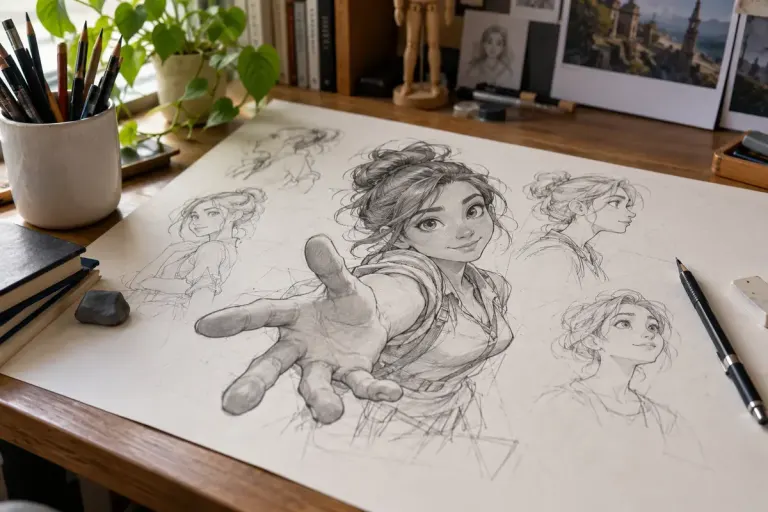
Foreshortening uses overlap and perspective to show an arm reaching towards the viewer. Practise the large forms before adding fingers and costume details.
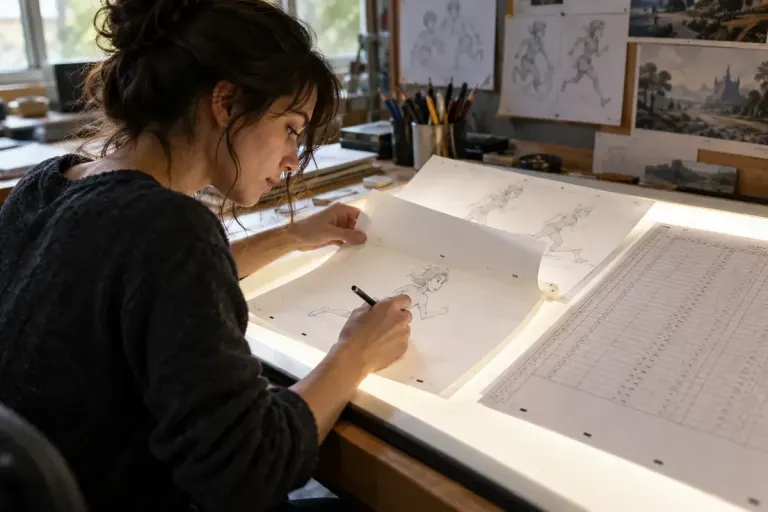
An exposure sheet records which drawing appears on each frame. Read its timing separately from the number of drawings to understand how a short action is built.
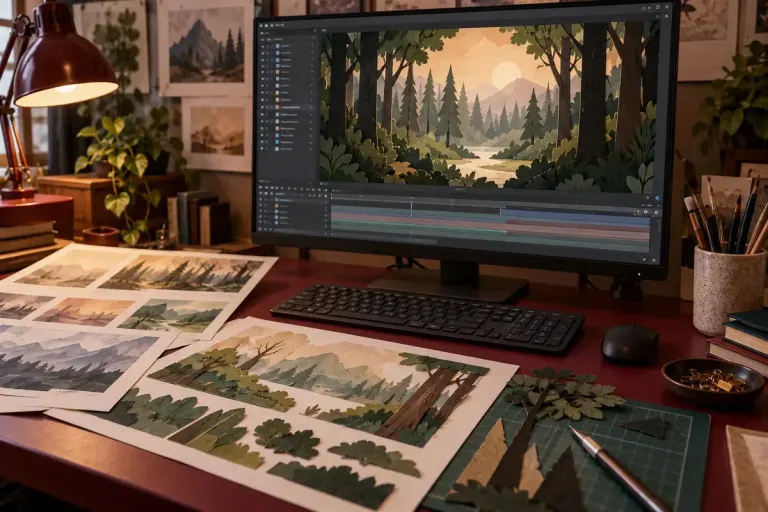
Notice how differently moving foreground and background layers create depth in animation, and try a simple original three-layer scene.
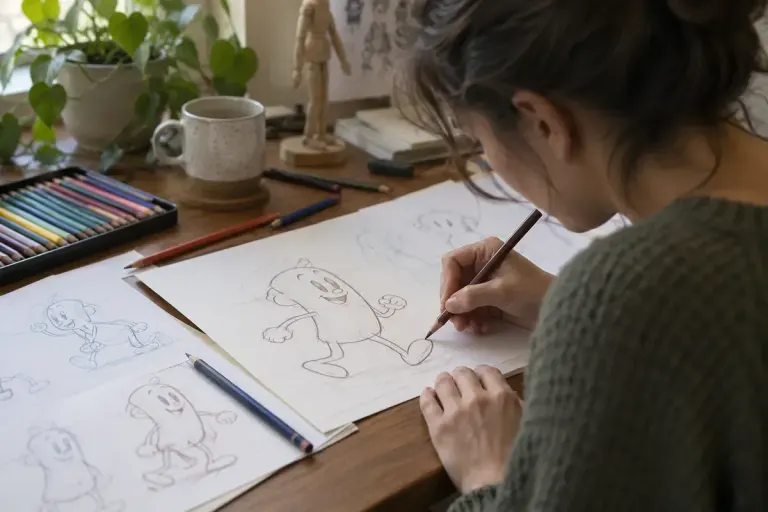
Squash and stretch makes an animated object feel elastic or heavy. Follow the changing silhouette while checking that its apparent volume still makes sense.

An animatic turns storyboard panels into a timed sequence. See how pauses, reaction shots and temporary sound reveal pacing before detailed animation.