
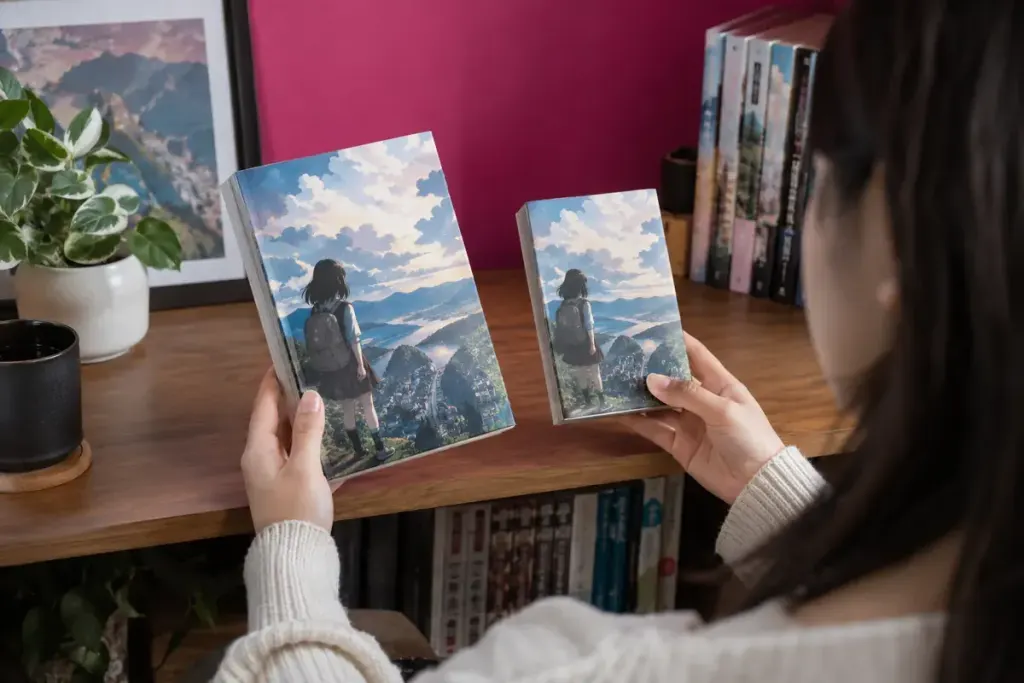
Two books show the same series title and a familiar character, yet one is much thicker and carries a different number. Buying by the cover alone can leave you with overlapping chapters, an unexpected language or the wrong place to continue reading.
Before choosing an edition, separate the story’s sequence from the publisher’s packaging. A single volume, an omnibus and a special-format release may organise the material differently.
Read the publisher’s listing
Check the exact title, language, format, volume number and contents. Look for an ISBN when comparing a publisher page with a shop or library listing. It identifies a particular edition or format more precisely than a cover image, although you should still read the description.
As a concrete example, VIZ’s page for One Piece Omnibus Edition, Volume 22 lists the paperback format, ISBN, dimensions and page count. That kind of bibliographic information helps establish what is being offered without relying on a retailer’s shortened title.
Confirm where the book begins and ends
An omnibus number does not automatically match the same number in a single-volume edition. Read the stated volume or chapter coverage. If it is missing or ambiguous, ask the publisher or bookseller before ordering, especially when continuing a collection assembled in a different format.
For an invented series called River Lantern, imagine that one omnibus collects single volumes one through three. Buying omnibus two would not necessarily be the next book after single volume one. This fictional example shows why the contents matter more than a number on the spine.
Choose for the way you read
A larger edition may display artwork differently and take more space on a shelf or in a bag. A thick book can be economical per collected volume yet less comfortable for some readers to hold. Try a library copy or inspect a shop sample when possible.
For digital editions, check the platform, supported devices and the terms of access. A digital listing is not the same object as a paperback even when the cover artwork matches. Read the current service information rather than assuming all purchases work alike.
Keep a small collection record
Record the series, publisher, edition, language and volumes already owned. A note on your phone is enough if it prevents an accidental duplicate. Include which edition you intend to continue with, especially when gifts or second-hand purchases are involved.
If consistency matters to you, check whether the chosen format covers the part of the series you want. Availability can change, and a beautiful first volume does not guarantee every later instalment is currently obtainable in the same edition.
A good purchase begins with knowing which book you are choosing. Once that is clear, the cover, extras and shelf appearance become enjoyable preferences rather than clues you have to use to guess what is inside.