
A quiet scene can stay with you longer than a spectacular fight: a character hesitates at a doorway, the room feels unusually empty, and a small movement says what the dialogue leaves out. The end credits offer clues to the different kinds of work behind that effect.
You do not need to recognise every name to begin. Start with three areas of craft and notice what questions each one encourages.
Storyboards: how the scene is presented
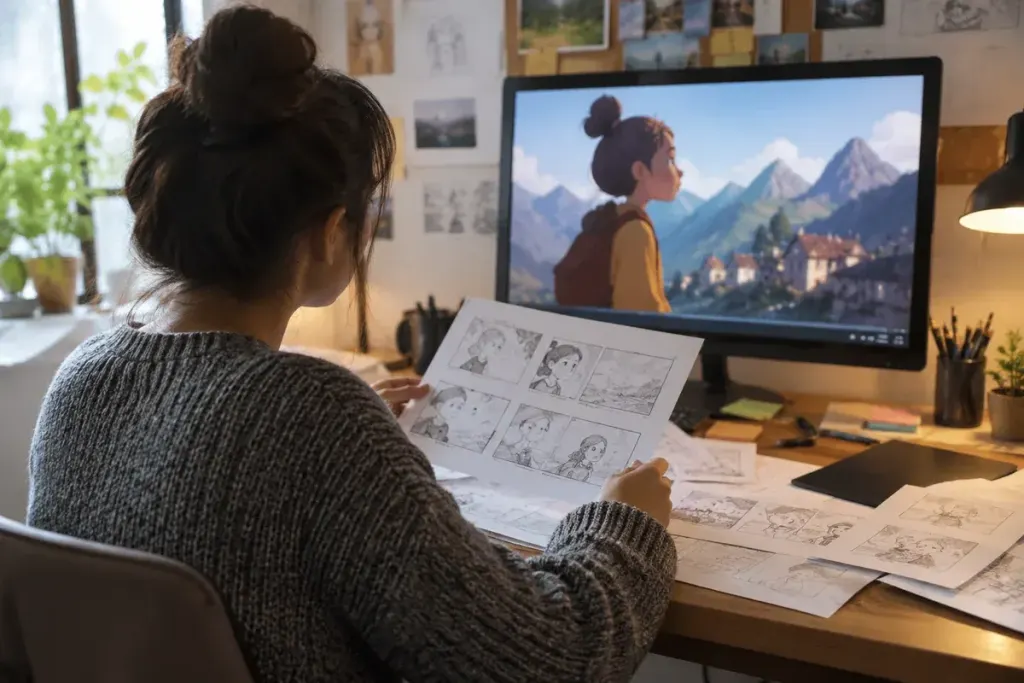
Storyboards plan the visual sequence, including how shots connect and where attention is directed. They help translate a screenplay into a form the production team can develop. Toei Animation’s production overview describes this planning stage and how later work builds on it.
On a second viewing, ask why the scene shows a reaction before the event that caused it, or why a pause remains on an empty space. These are observations about storytelling choices, not proof that one credited person alone made every decision.
Key animation: the shape of movement
Key animation establishes important poses and movement that are developed through the production process. The same action—sitting down, turning away, reaching for a cup—can feel hesitant, heavy or impatient depending on its staging and timing.
Try describing the movement without simply calling it smooth. Does the character commit immediately, stop halfway or change posture before speaking? This vocabulary helps you notice expressive animation even when the scene contains little action.
Backgrounds: the space the story inhabits
Background work gives a scene its environment. Rooms, streets and landscapes support the action and can establish a mood through arrangement and visual detail. Colour, compositing and other departments also contribute to the finished image, so avoid assigning the whole look to backgrounds alone.
Compare what the setting makes easy to notice. A crowded desk and a bare corridor can frame the same character differently. Ask how the space supports the scene instead of treating it only as attractive scenery.
Use credits as a starting point
Role names and divisions of responsibility vary across productions and translations. An episode’s credits do not necessarily identify who animated a particular cut. Use official staff information or a creator’s documented explanation before making specific attributions.
A short viewing note can name the episode, describe one moment and record the relevant credits for later exploration. This turns the closing scroll into an invitation to look more closely. The reward is a richer account of why a scene works, without reducing collaborative art to a single name or a frame-count contest.