
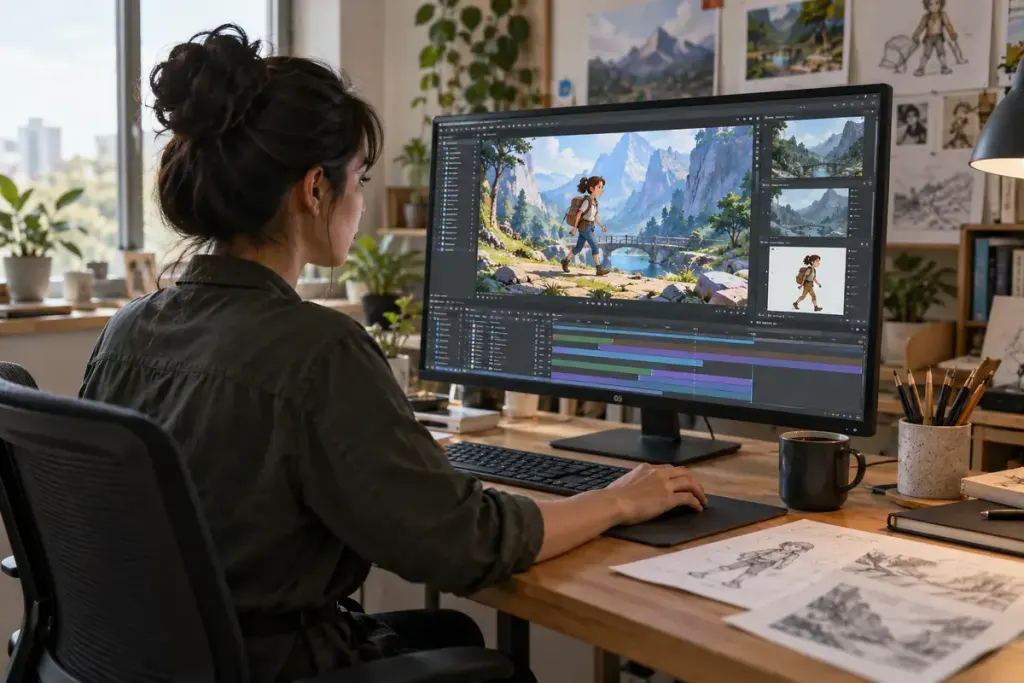
A character, a painted background and a layer of rain can each look convincing on their own. Bringing them together without making the character seem pasted onto the scenery is another stage of image-making.
Compositing combines separate visual elements into the final shot. Adobe’s introduction to layers and compositions demonstrates the general principle of building an image from layers. An anime production’s particular tools and workflow may differ.
Watch the relationship between layers
Choose a short scene and look at how the character sits within the environment. Is the foreground sharper than the distance? Does an effect pass in front of the figure or behind it? Do light and colour make the elements feel as though they occupy the same space?
These questions do not identify a specific software setting from the finished frame. They help describe what the final image does. Without production documentation, avoid attributing every visual choice to one department or one named technique.
A small viewing exercise
Pause a permitted clip at three points and sketch only the main layers as simple shapes: background, character, foreground object and effect. Then watch at normal speed. Notice whether the relationships change as the camera or subject moves.
For an invented example, mist placed only behind a figure may separate them from a distant landscape. A little mist passing in front can make them feel surrounded by the same atmosphere. The effect depends on the whole shot, not just on adding more fog.
Compositing should not be used as a catch-all explanation for everything attractive in animation. Drawing, design, layout, lighting decisions and editing contribute different work.
A useful review can credit the finished visual relationship without pretending to know the production history: “The foreground rain and softened distance place the figure convincingly inside the storm.” That is a specific observation the viewer can check.