
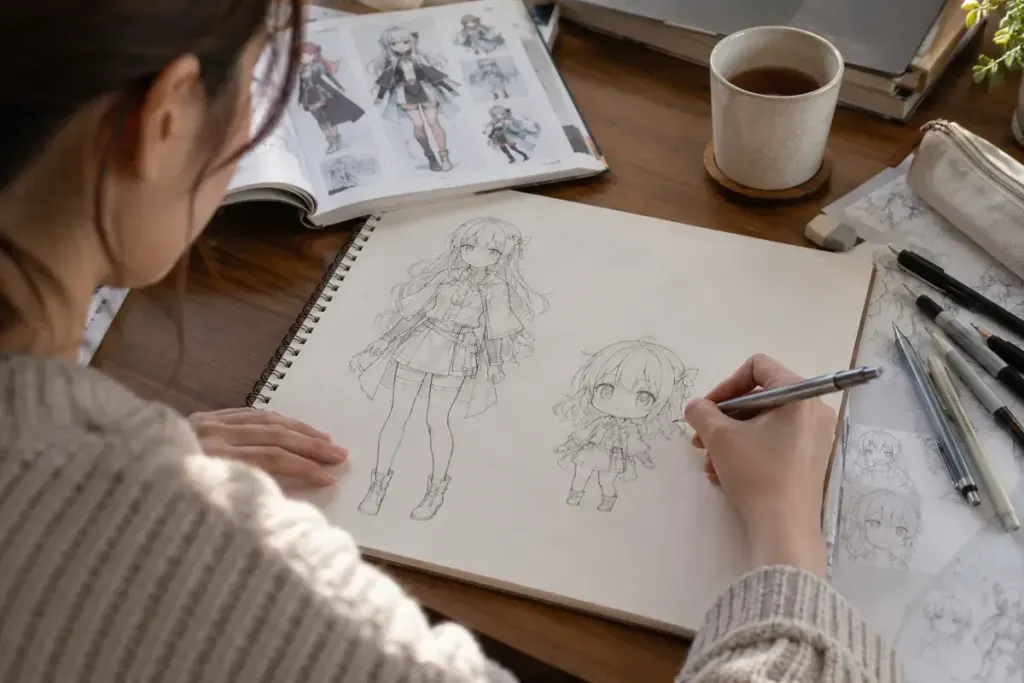
A character can spend most of an episode drawn with ordinary anime proportions, then shrink into a tiny, oversized-head version for a moment of outrage. The scene has changed its visual register. That does not necessarily mean the story’s character has physically transformed.
Chibi designs simplify and exaggerate proportions, often giving the face a large share of the image. Clip Studio’s guide to chibi character drawing explains the importance of distinctive features such as hairstyle, eyes and clothing when adapting a design.
Look for what stays recognisable
When a cutaway appears, identify the details that connect it to the usual design. A hair silhouette, accessory or characteristic pose may carry the identity even when the body is drastically simplified. The drawing can reduce detail while making the emotion easier to read.
For an invented example, a reserved student might become a tiny, rigid figure with an enormous frown after losing a friendly contest. The exaggerated image can make frustration playful without requiring a speech that explains every feeling.
Watch the return to the main scene
The timing matters as much as the proportion. Does the cutaway interrupt a serious exchange, punctuate a joke or accompany an internal reaction? Notice the sound, background and transition back to the normal composition.
Do not assume every series uses the device identically. A sustained chibi format, a fantasy transformation and a brief comic reaction can have different functions. Use the surrounding scene to judge what the change is doing.
Describe the effect before claiming an intention
A useful viewing note might say that the simplified reaction makes a disagreement feel less threatening, then identify the visual cues supporting that interpretation. Unless production commentary confirms it, keep the director’s intention separate from your reading.
Chibi cutaways are worth watching as deliberate choices in visual storytelling. Their appeal is not limited to cuteness: a few changed proportions can alter pace, emotional distance and the audience’s relationship with a familiar character.