
Animation Craft
A Storyboard Plans the Shot Before the Animation Exists
Storyboards help plan framing, action, and storytelling before finished animation. Look for what each shot needs to communicate.

Watch closely. Read a little further.
Storyboards help plan framing, action, and storytelling before finished animation. Look for what each shot needs to communicate.
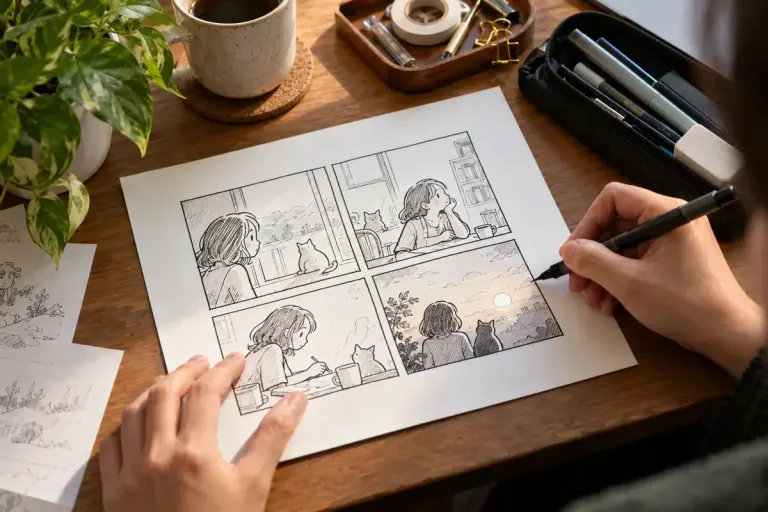
Read a four-panel manga strip through setup, repetition and the final change in perspective, then try a short original sequence of your own.
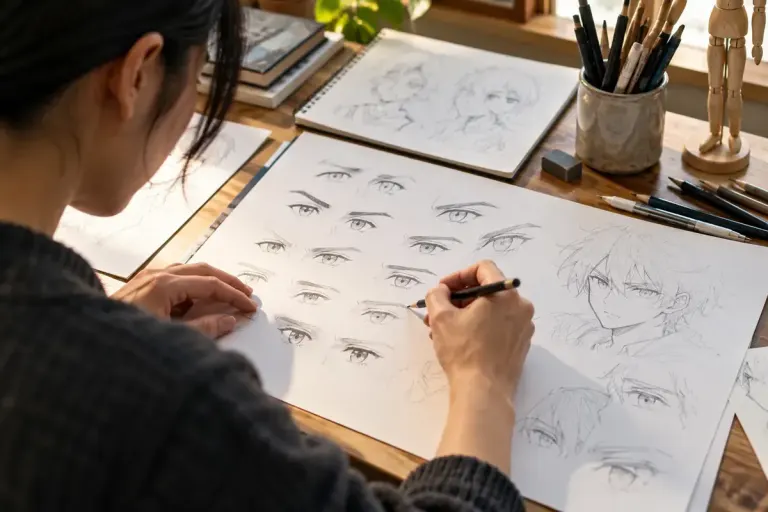
Study how eyebrow position interacts with eyes, mouth and timing in an anime scene, using repeated sketches rather than treating one expression as a universal code.
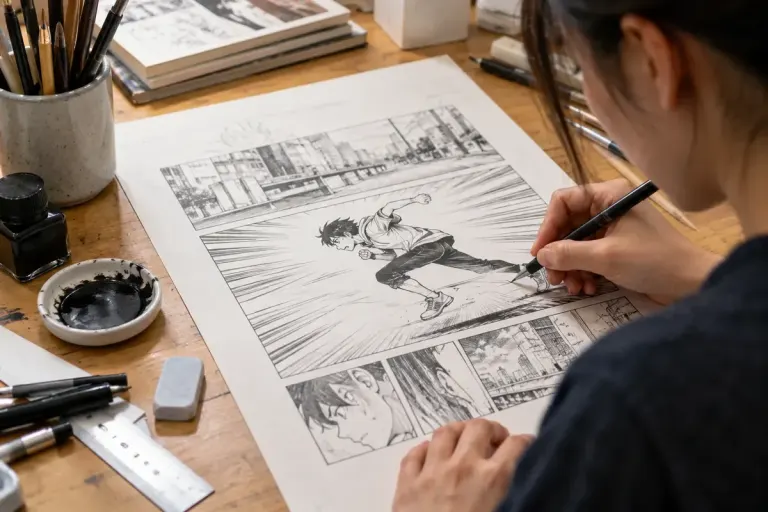
Read manga speed lines as directional choices. Compare lines behind a figure, converging lines and a still background to see how movement is suggested.
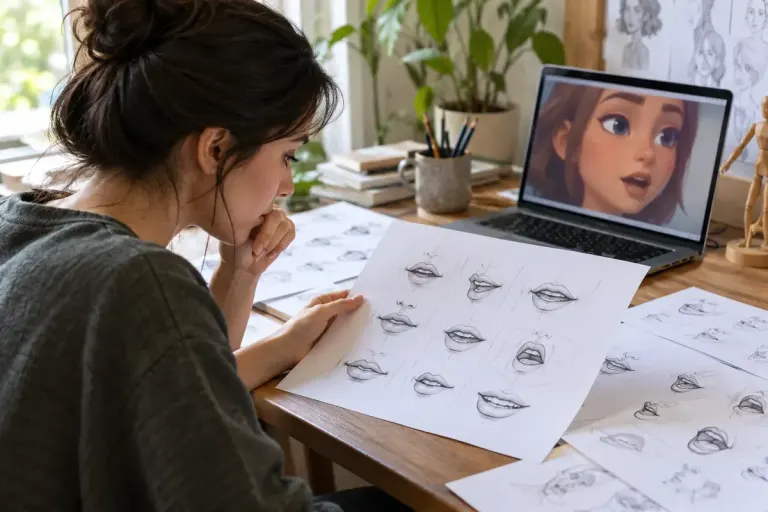
Watch a short anime dialogue scene for timing, held poses and selected mouth shapes without expecting one drawing for every syllable.
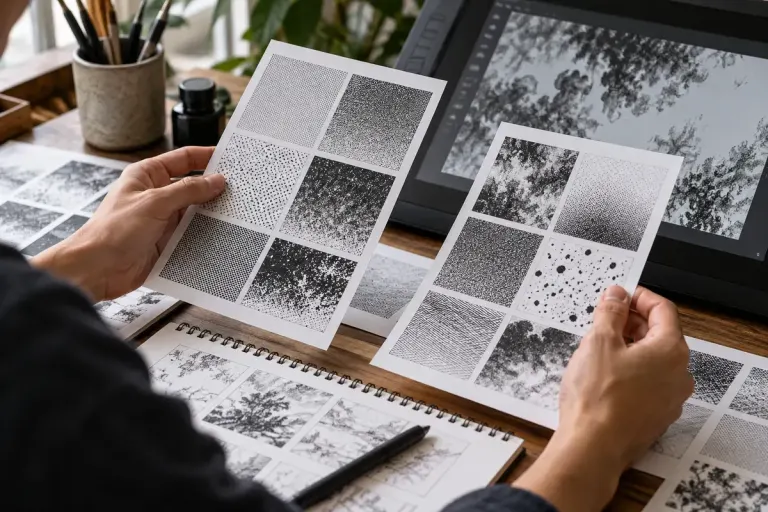
Notice how manga screentones create value and texture, then compare density, pattern and placement without treating every shaded area as the same effect.
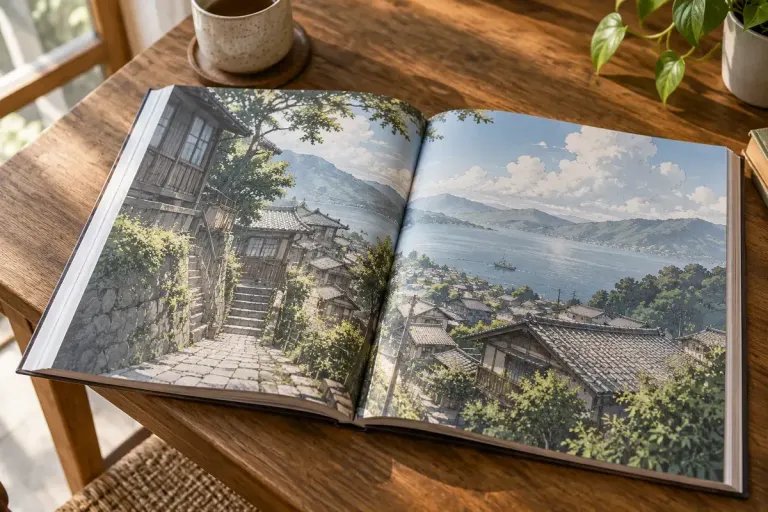
Read a manga spread as a composition across two pages, while protecting the book’s binding and checking the intended digital reading layout.
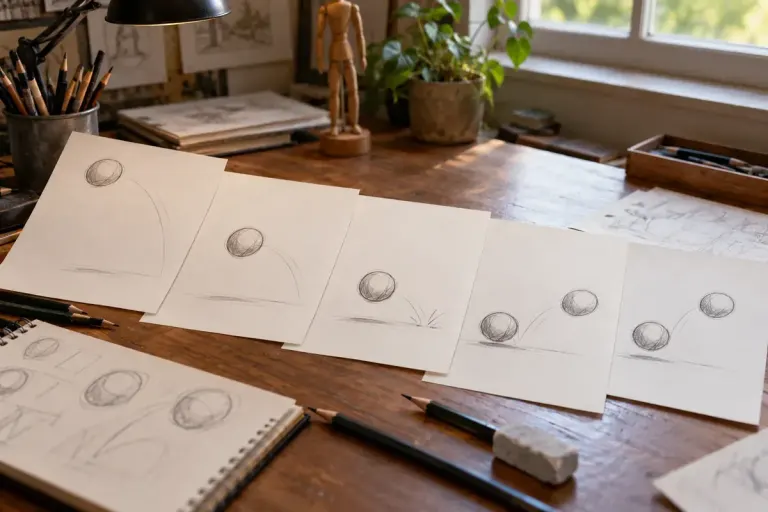
Watch how key drawings establish an animated action and how in-between drawings connect its poses without assuming every frame needs a new image.
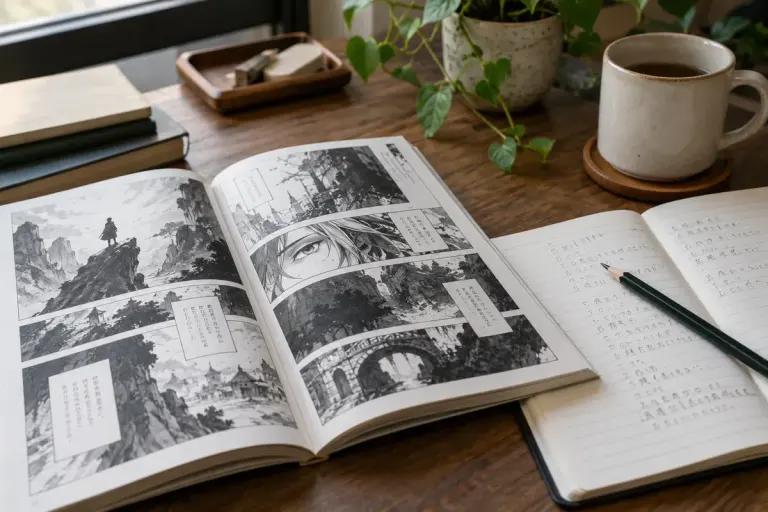
Small reading guides beside kanji can add information to manga dialogue. Notice what they tell the reader before assuming a translation has omitted a simple word.