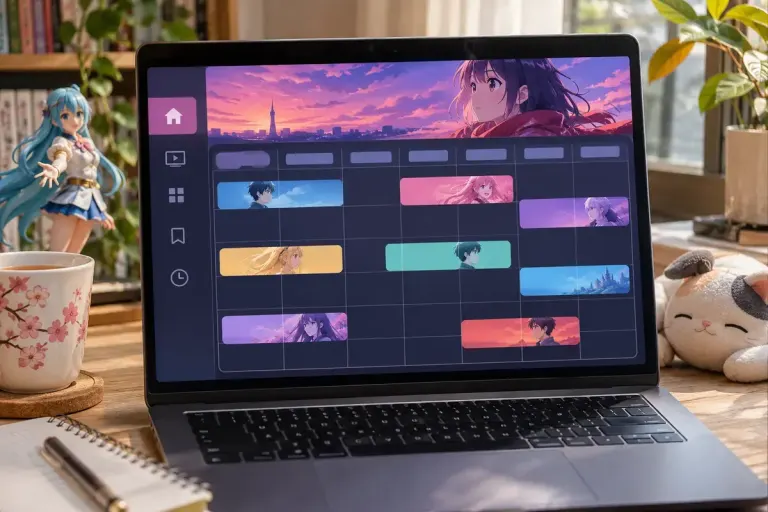
Anime Viewing
A cour and a season are different ways to describe an anime release
Cour labels describe broadcast blocks, while season labels can group a series differently. Read the announcement and episode order before starting the next release.

Watch closely. Read a little further.
Cour labels describe broadcast blocks, while season labels can group a series differently. Read the announcement and episode order before starting the next release.
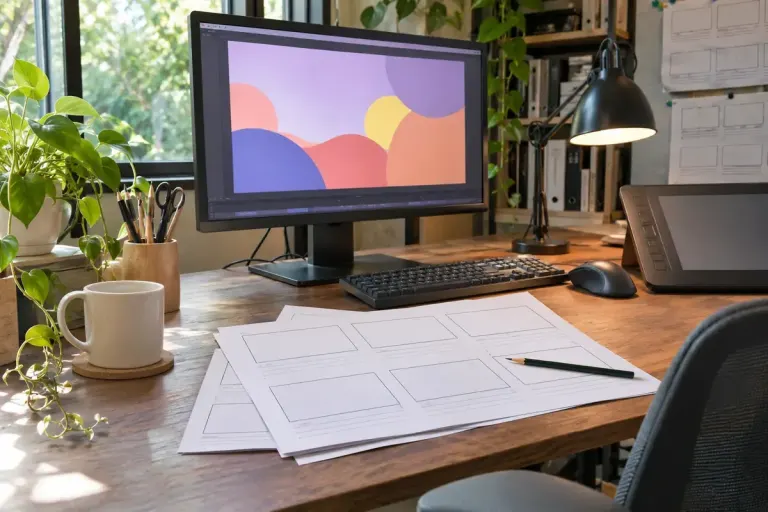
Anime credits can name both a production committee and an animation studio. Learn how those roles differ without assuming the credits reveal every contract or decision.
Understand how rotoscoping uses filmed movement as a drawing reference, why artistic choices remain, and why a lifelike anime scene is not proof of its production method.
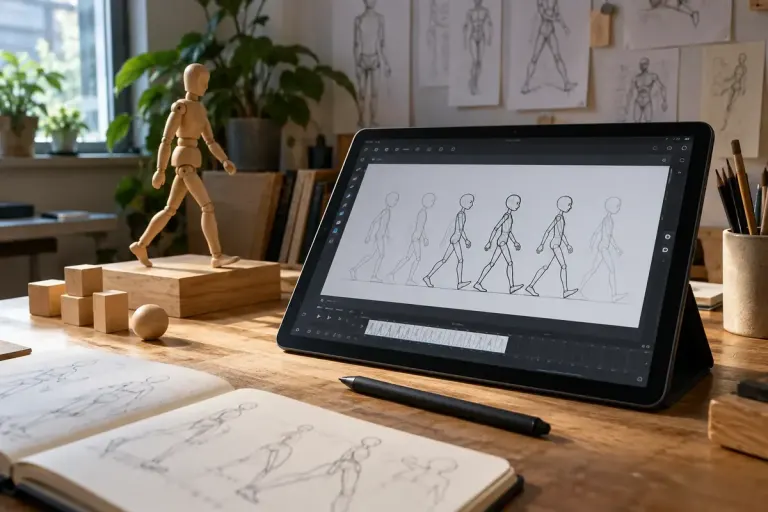
Make an animated walk feel grounded by checking the supporting foot against the floor, then matching body travel, timing and the loop’s final frame.
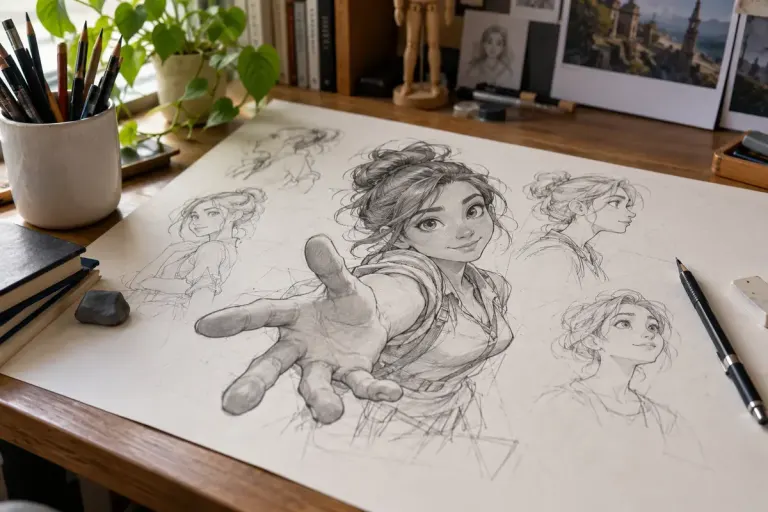
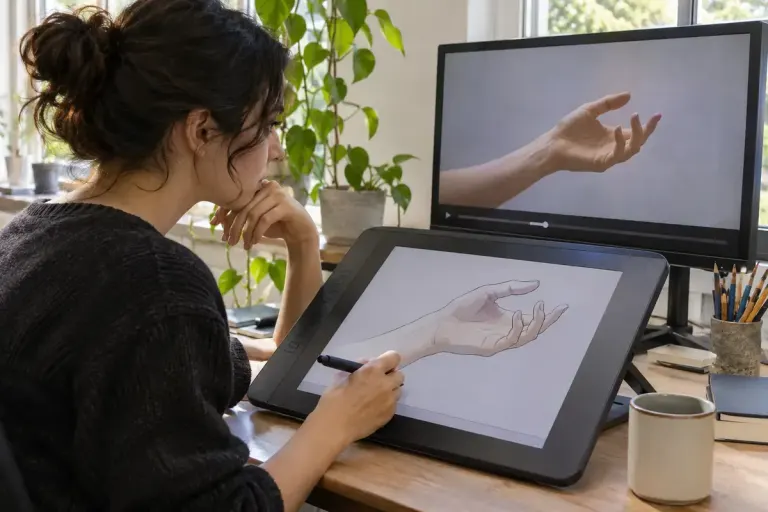
Foreshortening uses overlap and perspective to show an arm reaching towards the viewer. Practise the large forms before adding fingers and costume details.
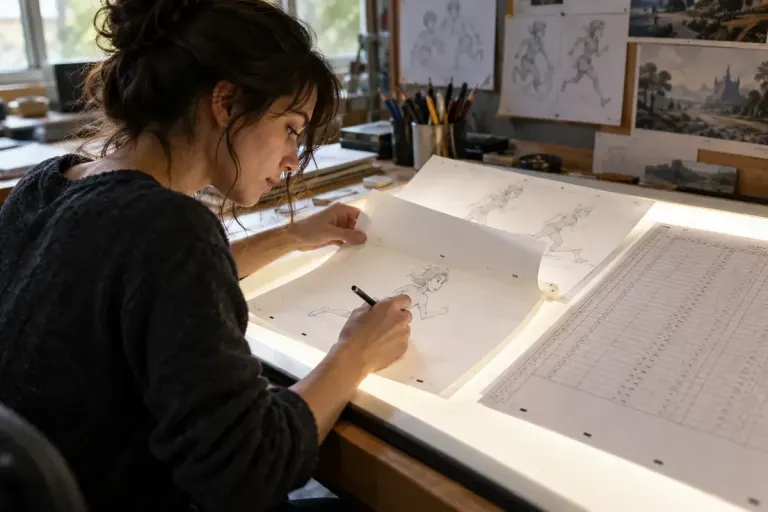
An exposure sheet records which drawing appears on each frame. Read its timing separately from the number of drawings to understand how a short action is built.
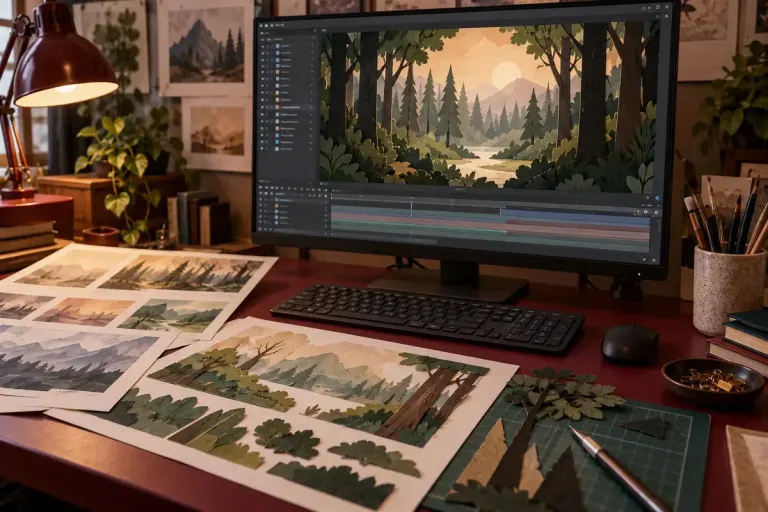
Notice how differently moving foreground and background layers create depth in animation, and try a simple original three-layer scene.
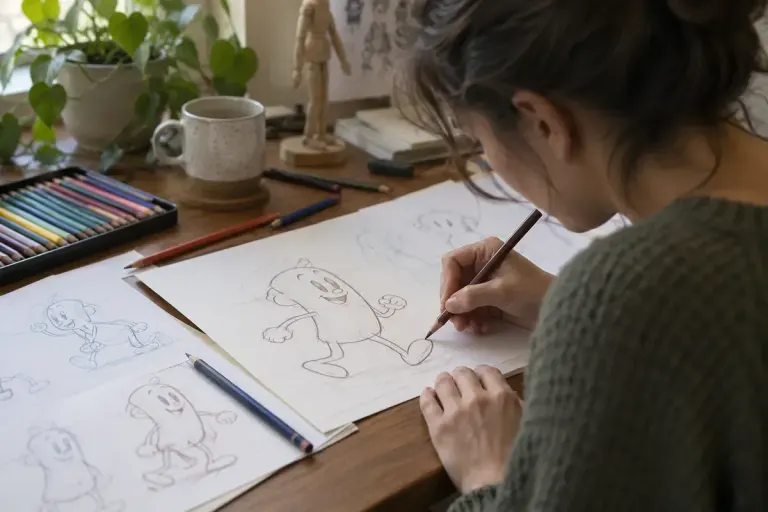
Squash and stretch makes an animated object feel elastic or heavy. Follow the changing silhouette while checking that its apparent volume still makes sense.

An animatic turns storyboard panels into a timed sequence. See how pauses, reaction shots and temporary sound reveal pacing before detailed animation.