
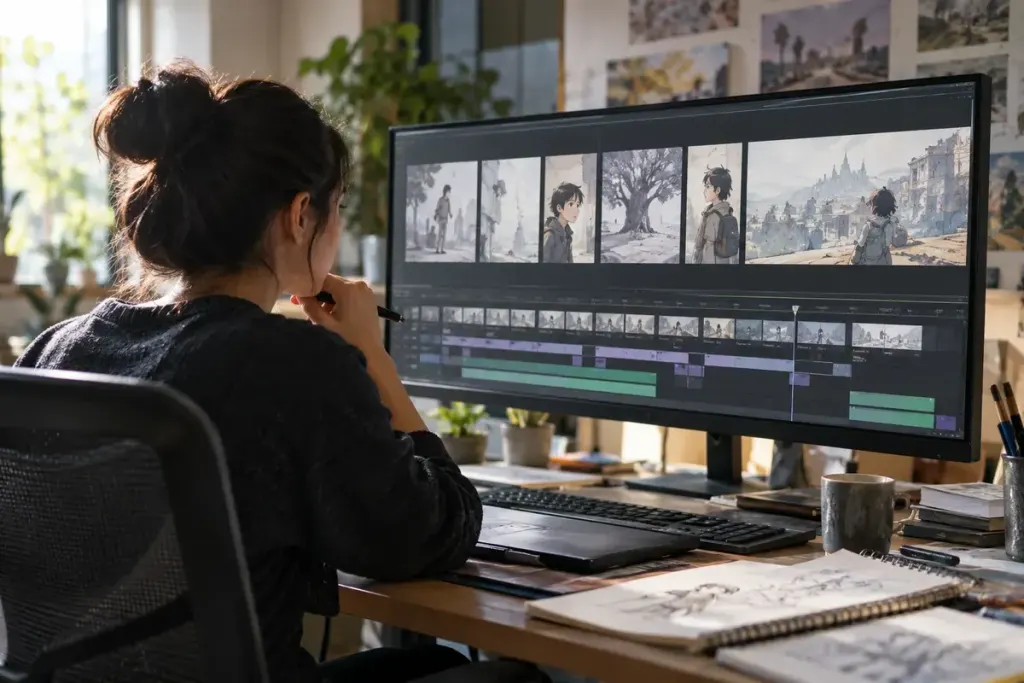
Three storyboard panels can describe a perfectly clear action: a hand lifts a kettle, pours tea and sets the kettle down. Play those panels for equal lengths, however, and the moment may feel strangely flat. The pour may appear rushed while the final movement takes too long.
An animatic gives the drawings time. In Toon Boom’s timing documentation, panels and scenes receive durations so the storyboard can play as a sequence. Temporary sound can also help test the intended relationship between action and audio.
Try the same scene with two rhythms
For a small original exercise, use three rough drawings of the tea-pouring scene. In version one, let each drawing last two seconds. In version two, make the lift brief, hold longer on the pour and let the final placement finish at its own pace. These timings are experiment settings, not rules for how a real production should stage the scene.
Watch without explaining the story first. Does the pour have time to feel deliberate before the kettle moves away? Does a pause create anticipation, or simply feel like the playback has stalled? The answer can reveal a missing drawing as easily as a timing problem.
Keep temporary elements recognisable as temporary
Label rough voice recordings, borrowed timing references and placeholder effects in the project notes. Use material you have permission to include when sharing the sequence. A polished sound effect can make an unfinished visual idea seem more resolved than it is.
When changing a shot, record what you wanted the viewer to understand. “Let the pour finish before the kettle moves away” is more useful than “make this part slower.” It connects the timing change to a storytelling purpose.
An animatic is a place to discover that a reaction needs another beat or an action needs a clearer drawing. Finding that before detailed animation gives the team a specific problem to solve, while the scene is still inexpensive to rearrange.