
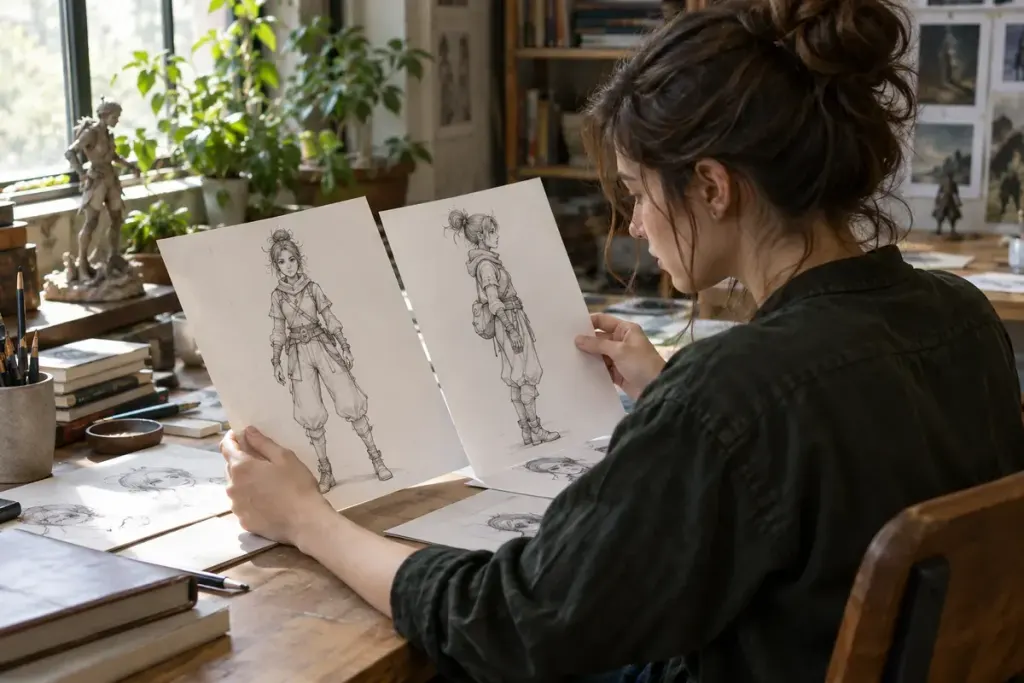
A character can turn, run and react across many shots while remaining immediately recognisable. Part of that continuity comes from reference material that makes the design easier for different artists to understand.
A character model sheet commonly gathers views, proportions and details in one place. Depending on the production, separate sheets may explore expressions, clothing or specific poses. The exact format varies; a fan-made reference should not automatically be treated as an official production document.
Look for the relationships between features
When studying a publicly released sheet, notice how the eyes sit within the head, how the silhouette changes in profile and which details remain visible from behind. A distinctive collar or hair shape may contribute more to recognition than a tiny decorative mark.
Compare a neutral view with an expressive drawing. The purpose is not necessarily to freeze every line in place. Animation needs changes of pose and expression, and the production’s drawing approach determines how far those changes can go.
For your own original character, make a small practice sheet with a front view, a side view and three expressions. Choose a few consistent landmarks, then draw a short action. Notice which features become unclear when the figure turns.
- Check the overall silhouette at a small size.
- Compare the placement of major features across views.
- Test one expression without changing the character’s identity.
- Revise the reference where it leaves an important question unanswered.
Do not mistake every difference between frames for an error. Perspective, movement, expression and deliberate stylistic choices can all change the drawing. A useful discussion identifies the specific feature and shot rather than declaring a whole episode “off model” from one unusual frame.
Model sheets are interesting because they show design as a shared working language. Studying them can make the craft more visible without reducing an animated performance to a rigid checklist.