
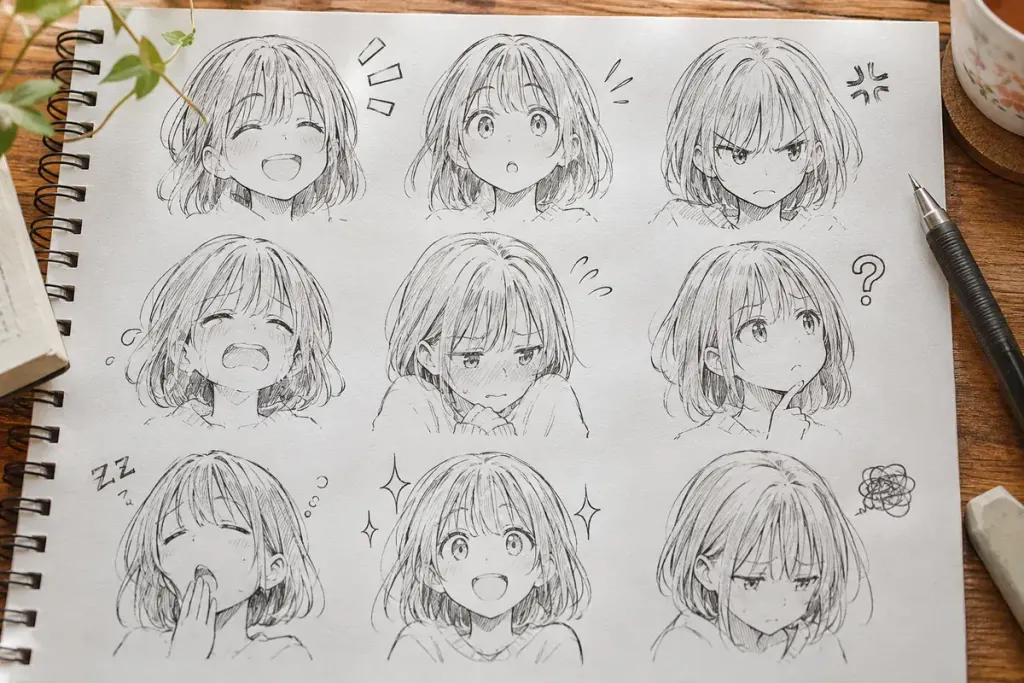
A manga character can appear perfectly still while a tiny mark above the head changes the whole scene. A drop, a cluster of lines or an exaggerated pulse mark may suggest embarrassment, irritation or strain. These visual additions are often discussed as manpu, part of manga’s expressive vocabulary.
They are easier to read when treated as clues within a drawing rather than a dictionary of guaranteed meanings. A sweat drop beside a nervous smile can feel different from a similar shape beside a character running up stairs. The surrounding action tells you whether the mark is literal, expressive or somewhere between the two.
Read the mark with the face
Illustrator Julillu’s Clip Studio Paint guide to emotion symbols explores ways artists use these additions to strengthen expressions. A symbol does not carry the scene alone. Eyebrows, mouth shape, pose and the neighbouring panel all contribute.
Try covering the small mark with a fingertip while leaving the rest of a panel visible. What emotion would you infer from the face itself? Uncover it and ask whether it confirms that reading, exaggerates it or introduces a comic contradiction. A calm expression paired with an obvious anger mark may be the joke.
Draw one face three ways
For an original practice exercise, sketch a simple character waiting beside a closed door. Make three copies with the same pose. On the first, add a small tension mark. On the second, add a single exaggerated drop. Leave the third without an extra symbol.
Now write one possible situation beneath each: waiting for an argument to end, arriving late to an appointment, or listening quietly. These are prompts, not fixed translations of the marks. Swap the captions and see which combinations still make sense and which require changing the face.
If another reader interprets the sketches differently, ask what detail led them there. That conversation is more revealing than declaring that one symbol always means one emotion. Familiarity with a particular artist or genre can affect how quickly someone reads the shorthand.
When reading translated manga, also notice whether a mark belongs to the artwork or accompanies written sound effects. Both may contribute to the mood, but they do different jobs. Following that small layer of visual language can make a quiet exchange as expressive as a large action panel, especially when the character is trying hard not to reveal what they feel.