
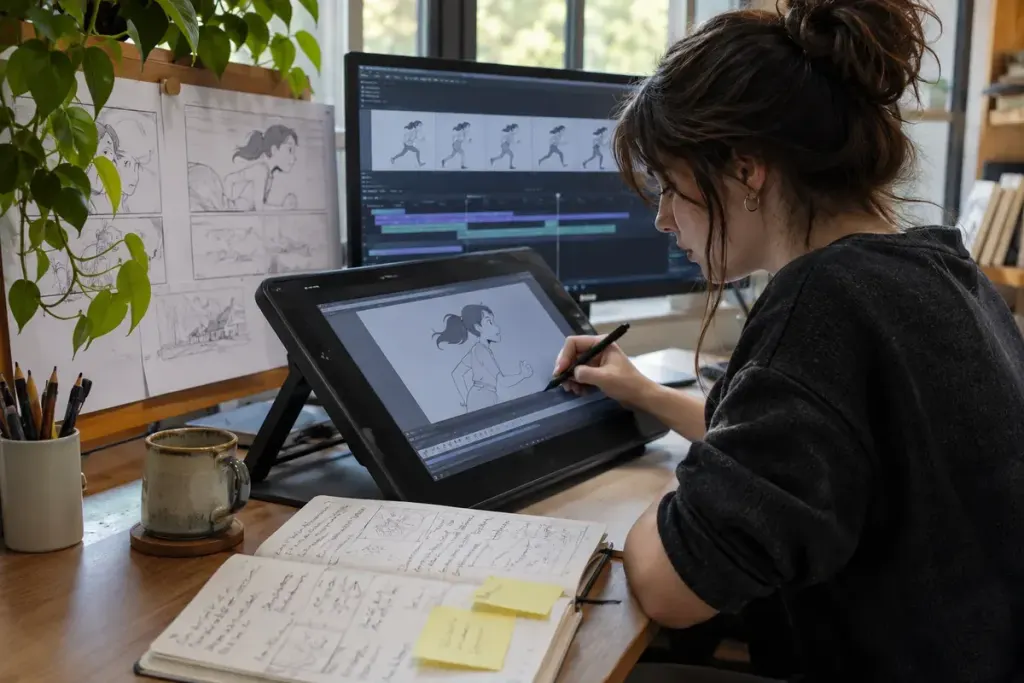
“This shot feels wrong” may start a discussion, but it is difficult to turn directly into a revision. An animation retake sends work back for a correction. A useful request explains where the problem occurs and what the revised shot needs to communicate.
Toon Boom Producer’s revision workflow illustrates the principle: a reviewer can add a written note, annotate a frame and identify the type of revision. This is one production tool’s workflow, not a claim that every anime studio uses the same system.
Describe the visible problem
Consider an invented shot in which a character picks up a cup. The hand reaches the handle, but the cup starts moving before the fingers close. A focused note can identify the affected moment and ask for the grip and lift to read as connected actions. “Make it better” leaves the animator guessing whether the concern is timing, drawing, acting or colour.
Include the shot identifier and version under review. If a note refers to a frame, make sure the frame reference belongs to that version. Otherwise a later edit can turn a precise instruction into an instruction about the wrong moment.
Protect the intention that already works
A correction should also recognise what should remain. In the cup example, the character’s hesitant expression might be effective even though the hand contact is unclear. Saying so helps avoid a broad redraw that loses the acting while fixing the mechanics.
When the revised shot returns, compare it at normal playback speed and in the surrounding sequence. A single frame can reveal a contact problem, but the final judgement concerns the movement the viewer experiences. Check the requested change first, then look for any new continuity issue introduced by it.
For a small independent project, a brief retake log can contain the shot, version, issue, intended correction and review result. It makes the discussion traceable without turning every revision into a judgement about the artist’s overall ability.