
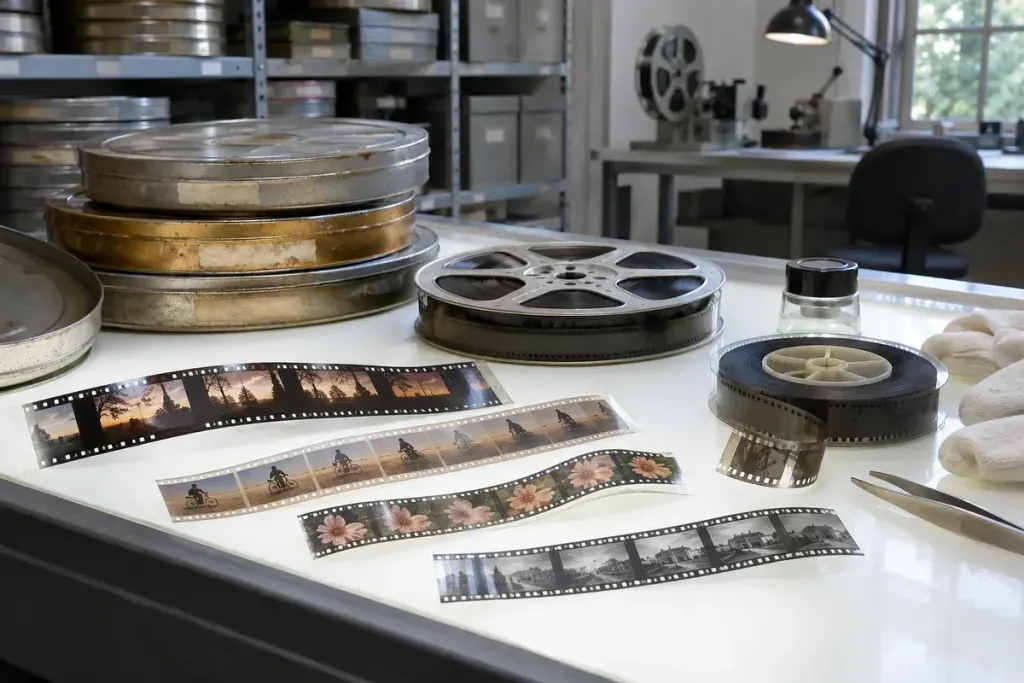
An optical printer in film production is not a machine that puts a movie frame on paper. It uses film projection and a camera to rephotograph material, allowing images to be transformed or combined into new film elements.
For viewers interested in animation and effects history, it helps explain how an image could be constructed after its original photography.
Think in elements rather than one finished shot
A final sequence may depend on separately prepared material: a title, an effect, a background or another image element. Rephotography creates an opportunity to combine or modify those components. The exact setup and process depend on the production.
The Academy Film Archive’s Linwood Dunn collection connects optical-printing history with surviving effects shots, titles and other materials. An archive’s elements can reveal stages that the audience never saw separately.
A documented example of transformation
The BFI description of Gillian Eatherley’s Deck describes refilming and transformations involving colour filters, positive and negative material and superimposition on an optical printer. That is a specific account of one work, not a recipe shared by every animated film.
It demonstrates why a completed image can differ substantially from the material first placed in front of a camera.
Read production claims carefully
When a making-of account mentions optical work, ask which shot or element it describes. Do not identify the process from grain or softness alone; several stages of capture, duplication and restoration can affect those appearances.
For an illustrative viewing notebook, keep three columns: what is visible, what the production source documents and what you are still inferring. A dissolve you notice belongs in the first column; the printer used belongs in the second only if a reliable record identifies it.
The interesting shift is to see the film image as something assembled through stages. Optical printing provides one historical route through those stages, alongside drawing, photography and the other work that makes a finished sequence possible.