
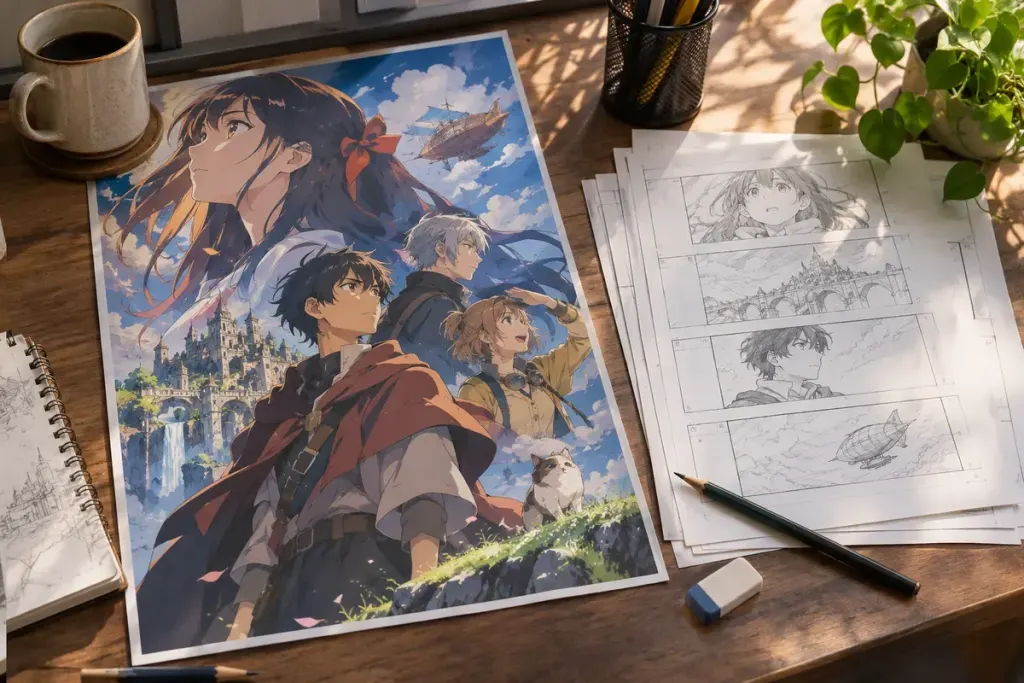
A new anime image appears with the characters arranged around a dramatic skyline. Before reading it as a frame from an episode, check how the production describes it. A key visual is promotional artwork and may compose characters, setting and mood in a way that no single scene reproduces.
For a concrete example, Crunchyroll’s report on the first key visual for Now That We Draw identifies the image as a release associated with its AnimeJapan presentation. The publication context helps distinguish an announcement image from footage or an episode still.
Read the arrangement before predicting the plot
Notice who occupies the foreground, where the eye is drawn and how the colours divide the image. Those choices can introduce relationships or an atmosphere without settling exactly what will happen in the story.
Keep interpretation in its proper form. “The composition places these characters apart” is an observation. “They will become enemies” is a prediction that needs other evidence. An image can invite a question without answering it.
Give the image its own date and source
When saving a viewing note, include the official announcement or the reporting page that identifies the visual. Productions can release multiple visuals at different stages, and an older image may circulate again without its original context.
A practical comparison places two officially identified visuals side by side in your private notes and asks what changed: cast emphasis, setting, colour or the information accompanying the release. Avoid assuming that a change means an earlier image was inaccurate.
Respect the artwork’s rights when sharing. Linking to the official release is often a clearer way to preserve context than reposting an uncredited crop.
A key visual rewards close looking on its own terms. It is a designed invitation to a production, and its visual argument can be interesting even when it gives away very little of the episode-by-episode story.