
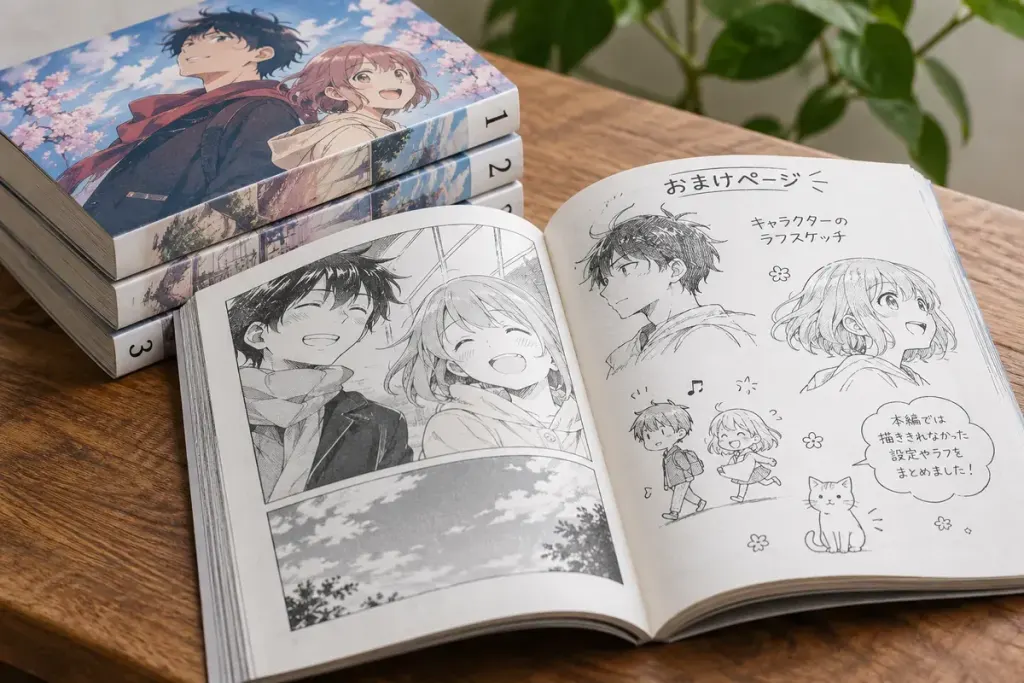
Finishing a manga chapter online does not always mean you have seen everything printed around it in a collected volume. Bonus sketches, short strips, author notes and other extras can belong to a particular book or edition.
Publisher descriptions provide useful evidence. Kodansha’s page for The Yum Cat, Nmeneko, for example, identifies bonus pages in that collection. Meanwhile, VIZ’s description of its first My Hero Academia box set lists a separate bonus booklet. These are different kinds of extra material, so “includes bonuses” is not a precise description by itself.
Check the edition, not only the series
Record the publisher, language, format and ISBN when comparing physical books. For a digital edition, inspect the publisher’s listing and the book’s contents where available. Do not assume that an omnibus, individual volume and box set package reproduce every extra in the same place.
If a discussion refers to a scene you cannot find, ask whether it comes from the main chapter, an extra strip or a separate booklet. That question may resolve the confusion without revealing further plot details.
Keep the reading context intact
A humorous bonus can exaggerate a character trait or address the reader directly. An afterword may discuss production rather than continue the story. Read the heading and surrounding pages before treating a detached panel as part of the main narrative.
For a review, identify the material you are discussing and avoid reproducing whole pages. Describe what the extra contributes: a different tone, a view of the drawing process or a small addition to characterisation. If it reveals later events, mark the spoiler boundary before explaining it.
Checking those details makes edition comparisons more useful. It also lets readers enjoy the extras for what they are, rather than forcing every page into the same place in the chapter sequence.